Water Fluoridation

Dr. John Laftsidis • November 20, 2025

Fact vs Fiction

With misinformation dissemination on the rise from those finding themselves in previously unfamiliar positions of authority, it is important to rely on accurate, proven information, especially in matters of health. Water fluoridation has long been the subject of conspiracy theory and other scare tactic infiltration with interjections and statements designed to forward a political agenda. That being said, if this has become a concern for you and your loved ones in recent times, I’d like to help by mythbusting and calming mass hysteria in an effort to help with health decisions of importance.


Information obtained in this edition of the Smile Files can be credited to Dr. Scott Tomar, associate professor of prevention and public health services and epidemiologist of the CDC. Fact: Fluoride in drinking water is a cheap and easy preventative measure for preventing tooth decay which saves thousands if not millions of dollars nationwide. Fluoride is a naturally occurring element in drinking water found to be highly effective in strengthening tooth enamel originally confirmed in studies of Native American populations. There exist areas in our country where fluoride content in natural water is low or non-existent. The addition of fluoride merely supplements existing levels to 1 part per million to replicate nature. Additionally, following an 80-year-old study and implementation of fluoridated water in Grand Rapids, MI, Evanston, IL, New York City, and Ontario, Canada, many other cities saw the positive result of a dramatic decrease in dental decay and followed suit with fluoridation.


The misinformation about the assumed effects of fluoride had started years before the addition to drinking water. No causal relationship has been shown to exist between fluoride and AIDS, immunity, bone cancer, autism, retardation, dementia, skin disorder (not even communist plots nor nuclear waste relation!). There has simply never been any real world evidence established to support this.

Unfortunately, in a post-COVID world, many are more receptive to conspiracy theories regarding vaccinations and healthcare. Politically speaking, there is no real interest in becoming educated from scientific research. Fluoride is in fact all around us—in the soil, rocks, seawater, and naturally occurring in foods. The freedom of choice argument is moot when one considers the implementation of seatbelt laws, iodized salt, and the addition of vitamin D to milk. The only motivations and aspirations in these examples are to protect the population from disease and injury, save US taxpayers and medical insurance utilizers millions of dollars with no adverse effects.


As dental providers with families, our primary concern is to prevent disease and public harm…so why would we advocate for a harmful substance to be given to the public? The American Academy of Pediatrics, American Dental Association, American Medical Association, UK, and Australian health organizations and National Toxicology Reports all support fluoridation in water, as there are no proven adverse effects. While bottled water may seem like a healthy alternative, tap water is far more regulated for safety and contains fluoride, an important element for maintaining healthy teeth.
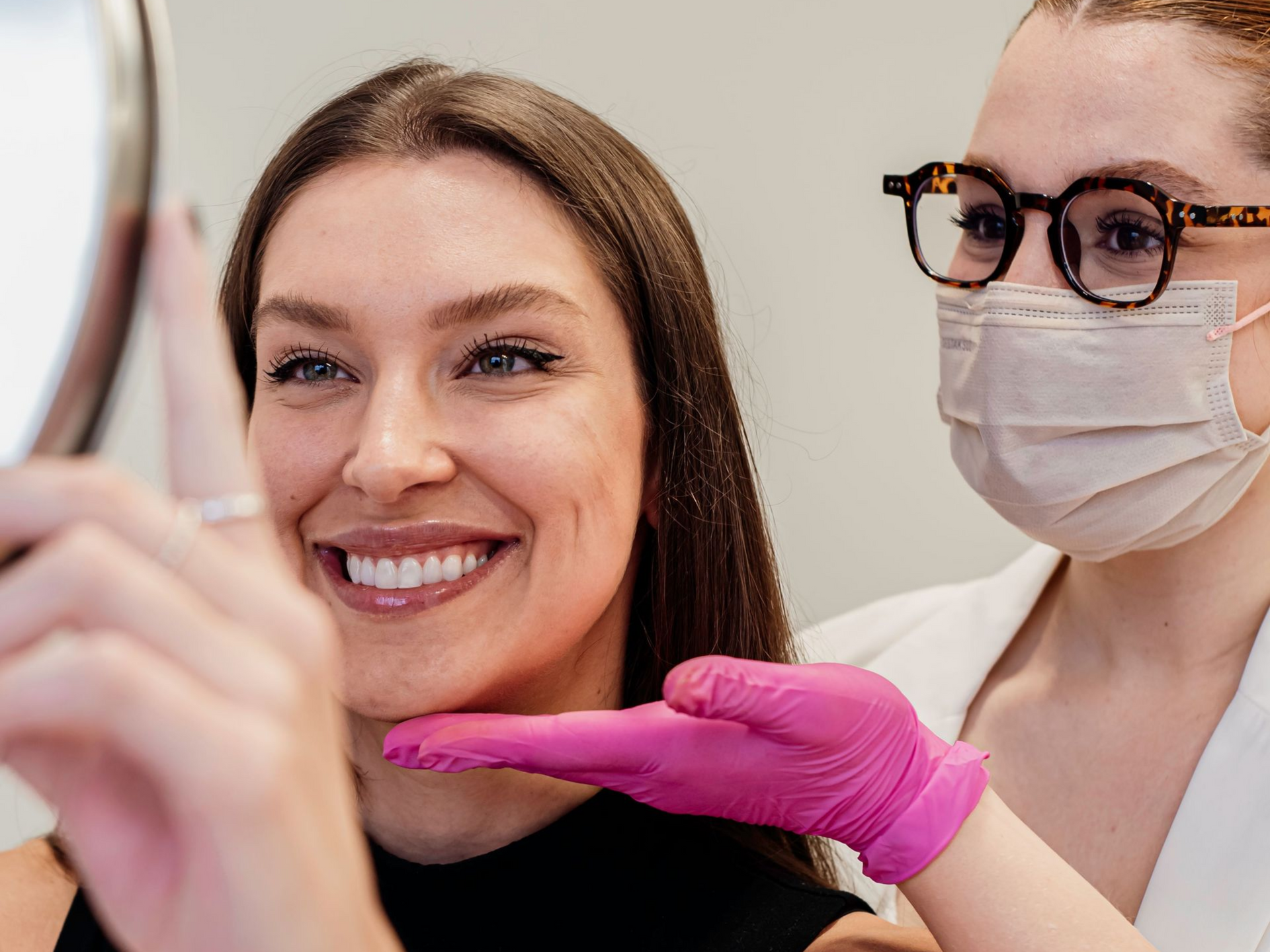

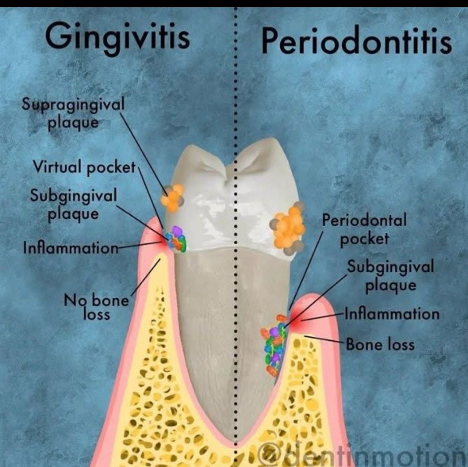
Diagram comparing gingivitis and periodontitis, showing plaque, inflammation, bone loss, and pocket formations.
By Dr. John Laftsidis March 19, 2026
Bleeding gums are never “normal” regardless of how often or how much blood is present. Just as is the case with bleeding, for instance, as the result of a cut on a finger, nosebleed or even a bleeding stomach ulcer: bleeding indicates injury or damaged tissue. In cases other than the mouth the obvious course of action is to stop the bleeding with whatever is the appropriate course of action. So within the mouth, specifically the gums, the scenario is exactly the same in that an abnormal situation must be corrected to stop the bleeding. In the case of bleeding gums the reasons can range from mild, local inflammation (like a stuck popcorn kernel) to chronic soft tissue damage to active infection and eventually bone loss of the jaws leading to loosening and loss of teeth. Periodontitis: A “silent” disease Very frequently I hear disbelief when I find signs and symptoms of periodontal disease with the common response of “…but doctor I never have any pain in my mouth, how can I have periodontal disease.” And the answer is “Exactly!” It’s not until late stages that pain symptoms are felt as a result of loose teeth, but at that point usually over 50% of supporting bone has already been lost. Periodontal disease is a slowly progressing process of soft and hard tissue destruction without pain. In most cases the slow progression of nerve deterioration does not present with any pain. The good news is that (in most cases) this process is preventable with inexpensive and easy dental hygiene, namely daily brushing AND flossing to remove plaque! Bleeding gums and plaque: What’s the connection? Plaque is a sticky, pasty substance composed of dead epithelial cells, retained food particles, salivary minerals and lots of bacteria. The bacteria live and thrive on the yummy food particles left behind between and on the teeth. Like every other living being on earth, these bacteria produce acidic waste as a product of their digesting leftover food. This acidic waste is what activates the body’s defense systems which produce inflammation. This chronic inflammation process lies at the root of periodontal disease and is similar in several ways to chronic infection. The body, in essence, self destructs in it’s attempt to fight and destroy the bacterial waste products. Gingivitis to Periodontal Disease Although a direct cause-effect relationship between gingivitis and periodontal disease is not well established, both processes share similar symptoms and many consider gingivitis as a precursor to periodontal disease. With the gum swelling and plaque buildup that occurs in gingivitis “pockets” form at the gum-tooth junction. These pockets form shelters for bacteria to thrive and progress in depth over time. They eventually reach depths which one cannot reach with flossing and brushing. These pockets are the very foundation of periodontal disease present in almost every case. A plan to fight this disease. Yes, periodontitis is a real disease. It affects many people and is the leading cause of adult tooth loss worldwide. The most effective weapons at your disposal to fight this problem are toothbrush, floss and regular dental checkups. Inexpensive and highly effective but only if done regularly and diligently. Treatment for periodontal disease is expensive, possibly extensive and in many cases does not stop the disease but only slows it down. So the best thing to do is prevent it from even starting.
White tooth with a cartoon hobo character on its surface, holding a bindle and giving a thumbs-up.
By Dr. John Laftsidis March 2, 2026
Mesial drift (the term we use to assign direction of movement) is the natural, gradual tendency for teeth to slowly shift forward, towards the front of the mouth (the midline), a common phenomenon that can cause crowding, especially in the lower front teeth, as people age.
Woman with dental jewelry, smiling. Text reads
By Dr. John Laftsidis December 18, 2025
New offering for all North Branch Dental Works patients!
Close-up of smiling mouth with pink lipstick and bright white teeth.
By Dr. John Laftsidis November 7, 2025
A new dental software program at NB Dental Works shows before-and-after photos of esthetic dentistry services. The free consultation is quick, painless, and pressure-free.
Person in a dentist chair smiles at the camera, tools visible in background.
By Dr. John Laftsidis October 23, 2025
Gingival recession, often caused by periodontal disease, can lead to the appearance of “black triangles” between teeth. While periodontal treatment addresses bone loss, it doesn’t address this esthetic concern. Injectable periodontal filler, offered at North Branch Dental Works, provides immediate esthetic improvement.